What is the best keyboard for RSI or wrist pain?+
The best keyboard for RSI or wrist pain is the Kinesis Advantage 360 (~$450). Its split ergonomic layout separates your hands to shoulder width, eliminating the ulnar deviation (outward wrist angle) that causes carpal tunnel. Concave key wells match natural finger curl, and thumb clusters offload work from your strained pinkies. The learning curve is 2-4 weeks, but experienced users report significant reduction in wrist pain. For preventive RSI care under $100, the Keychron K2 with Silent Red switches is the best budget option โ light 45g actuation force reduces cumulative finger strain over long typing sessions.
Can a keyboard prevent carpal tunnel or RSI?+
Yes, ergonomic keyboards can significantly reduce RSI risk when combined with proper posture, breaks, and stretching. The biggest single change is switching to a split keyboard (Kinesis Advantage 360, ZSA Moonlander, Logitech ERGO K860), which eliminates ulnar deviation โ the wrist angle most associated with carpal tunnel. Light-actuation switches (Cherry MX Red at 45g or Silent Red at 45g) reduce the force per keystroke by 30-50% compared to Blue clicky switches, cutting cumulative finger and tendon strain. Low-profile keyboards (Nuphy Air75, Logitech MX Keys) reduce finger travel distance. No keyboard prevents RSI on its own โ you also need proper break patterns and wrist rests โ but the right keyboard is the biggest single equipment investment for RSI risk reduction.
Are split keyboards worth it for RSI?+
Split keyboards are worth it if you have active RSI symptoms, wrist pain, or a family history of carpal tunnel. Splitting your hands to shoulder width eliminates ulnar deviation completely โ the wrist angle most implicated in RSI development. The Kinesis Advantage 360 also adds concave key wells that match natural finger curl and thumb clusters that offload work from your pinkies. The trade-off is a 2-4 week learning curve during which your typing speed drops significantly. If you type 6+ hours daily and have any RSI symptoms, a split keyboard is worth the initial slowdown. If you don't have symptoms yet, a light-actuation non-split keyboard (Keychron K2 Silent Red) is preventive enough for most people.
Which switch type is best for RSI?+
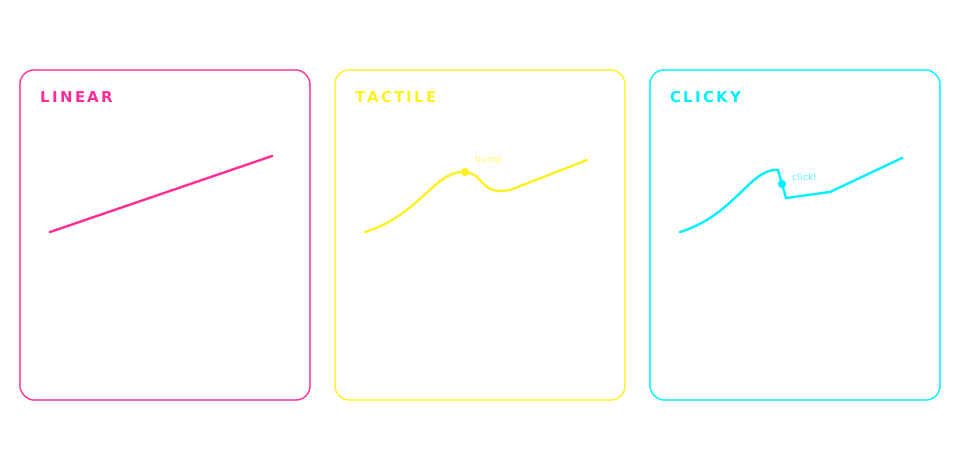
For RSI, the best switch type is a light linear switch โ Cherry MX Silent Red (45g, dampened) or Cherry MX Red (45g, standard). Light linear switches minimize the force required per keystroke, reducing cumulative finger and tendon strain over long typing sessions. The silent variant adds rubber dampeners inside the switch to muffle bottom-out impact, further reducing shock through your fingertips. Avoid Blue clicky switches (60g actuation, mechanical click) โ they require more force and the click mechanism creates additional finger fatigue. Brown tactile switches (55g) are a middle ground: tactile feedback without excessive force, still reasonable for RSI-conscious users.
Does a low-profile keyboard help with RSI?+
Yes, low-profile keyboards reduce RSI risk by cutting finger travel distance. Standard mechanical switches have 4mm of total travel (2mm to actuation, 2mm to bottom-out). Low-profile mechanical switches have 3mm total travel, and scissor-switch membranes (like Logitech MX Keys) have 2mm travel. Over a workday of ~50,000 keystrokes, that reduction adds up to meaningfully less finger movement and less cumulative strain. Low-profile is especially useful if your RSI is primarily finger fatigue rather than wrist angle. For wrist-angle RSI (ulnar deviation), a split keyboard remains the best solution regardless of key travel.
How much should I spend on a keyboard for RSI relief?+
For preventive RSI care (no active symptoms), $80-110 is the sweet spot โ Keychron K2 with Silent Red switches at ~$80 or Nuphy Air75 V2 at ~$110 give you light actuation and short travel without a premium price. For active RSI symptoms or professional heavy typists (6+ hours daily), the Kinesis Advantage 360 at ~$450 is worth the investment โ split ergonomic layout is the single biggest lever for reducing carpal tunnel risk. Spending above $200 buys premium materials (aluminum, gasket-mount) and QMK programmability, but the RSI benefits plateau above ~$200 unless you go to a full split ergonomic layout.